Canvas Fabric for Automotive Interiors Wholesale — OEM Sourcing Guide
---
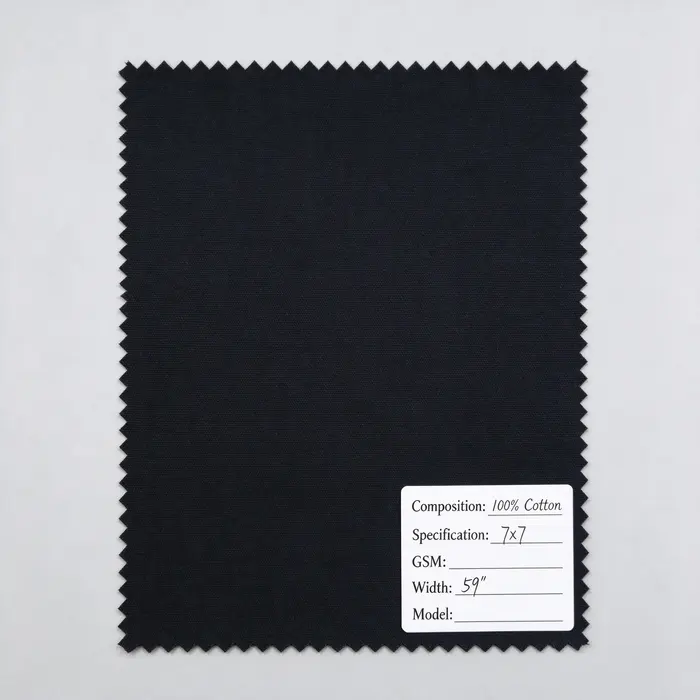
Target Keyword: canvas fabric for automotive interiors wholesale Secondary Keywords: automotive canvas fabric supplier, automotive interior trim canvas bulk, OEM automotive canvas fabric manufacturer Word Count: ~1,450 words (body) Series: Week 19 Date: July 8, 2026
Introduction
When a Tier-1 automotive seating supplier in Monterrey rejected 22,000 meters of seat-back canvas because the Martindale abrasion data came from the greige fabric — not the finished, laminated composite — the procurement director lost $67,000 in material write-offs and three weeks of line downtime. His mistake wasn't choosing the wrong fabric. He trusted a spec sheet that skipped the one test protocol automotive OEMs never negotiate: end-use-condition performance data.
Automotive interior textiles represent a $33.18 billion market in 2025, projected to reach $44.68 billion by 2034 (Fortune Business Insights). Within this, canvas fabric for automotive interiors wholesale occupies a critical but often invisible position — the structural backing material behind every seat panel, door trim insert, trunk liner, and headliner substrate in passenger vehicles, commercial trucks, and EV platforms.
This guide breaks down the technical specifications, testing protocols, and sourcing criteria that separate Tier-1-ready canvas suppliers from general textile mills.
Technical Deep Dive: What Makes a Canvas Automotive-Grade?
A canvas fabric earns the "automotive-grade" designation through compliance across four interdependent performance dimensions — not just one or two.
1. Weight and Construction Parameters
Automotive canvas fabrics typically operate in the 200 to 450 GSM range, depending on the application layer:
| GSM Range | Typical Weave | Thread Count (EPI × PPI) | Primary Application |
|---|---|---|---|
| ----------- | -------------- | -------------------------- | --------------------- |
| 200–260 | Plain 1/1 | 48×44 to 52×48 | Headliner substrate backing, lightweight door panel inserts |
| 280–350 | Plain or 2/1 Twill | 52×48 to 56×52 | Seat back panels, parcel shelf covers, trunk side liners |
| 380–450 | 2/1 or 3/1 Twill | 56×52 to 60×56 | Load-floor covers, heavy-duty trunk mats, commercial vehicle interior panels |
Yarn construction matters as much as weight. Ring-spun yarns at 18–22 TPI deliver 30–50% higher Martindale abrasion resistance compared to open-end (rotor) yarns at equivalent GSM — a difference that translates directly to warranty claim frequency for seating applications.
2. Mechanical Performance Benchmarks
Automotive OEM specifications typically require:
- Martindale abrasion (ISO 12947-2, 12 kPa): ≥40,000 cycles to end-point for seat backing; ≥25,000 cycles for door panel inserts. The 12 kPa loading (automotive standard) is 33% more aggressive than the 9 kPa general textile protocol — verify which load was applied. - Tensile strength (ISO 13934-1): ≥600 N/5cm warp, ≥500 N/5cm weft for structural backing layers. - Tear resistance (ISO 13937-2 trouser tear): ≥25 N for door panel applications, ≥35 N for seat back and load-floor. - Seam slippage (ISO 13936-2): ≤2 mm at 180 N — a frequently overlooked parameter that determines whether stitched seat-back map pockets survive 100,000+ insertion cycles.
3. Flammability Compliance
Every square meter of fabric entering a vehicle interior must pass horizontal burn rate testing:
- FMVSS 302 / ISO 3795: Burn rate ≤100 mm/min for materials used in occupant compartments. Fabrics failing this threshold — even by 5–8 mm/min — trigger complete batch rejection at incoming QC. - Additional OEM-specific standards: Some European OEMs layer EN 45545-2 (railway) requirements onto premium vehicle programs for enhanced fire safety.
4. Emissions and Fogging
Interior fabrics emit volatile organic compounds (VOCs) when heated by solar load. The two critical protocols:
- VDA 278: Thermal desorption analysis quantifying VOC (volatile organic compounds, 90°C/30 min) and FOG (condensable emissions, 120°C/60 min) in μg/g. Automotive OEMs typically set VOC ceilings at 100–500 μg/g and FOG at 250–1,000 μg/g depending on the application zone. - DIN 75201 / ISO 6452 fogging test: Gravimetric fogging ≤2 mg after 16 hours at 100°C — critical for fabrics positioned near windshield sight lines (parcel shelves, instrument panel substrates).
Fabrics with residual sizing agents, low-grade spin finishes, or non-automotive coating formulations routinely fail VDA 278 thresholds. This is the single most common reason general-textile mills cannot cross over into automotive supply.
Key Applications in Automotive Interior Manufacturing
H3: Seat Back Panels and Map Pocket Backing
The seat back is the highest-wear textile surface in a vehicle interior after the seat cushion itself. Canvas used here must combine ≥40,000 Martindale cycles with ≤2 mm seam slippage at 180 N — the map pocket insert undergoes repeated tension loading every time a passenger slides a tablet, water bottle, or document into the pouch. Recommended specification: 300–380 GSM, 2/1 twill, CVC (cotton-polyester) blend with anti-fray edge treatment.
H3: Door Panel Insert and Armrest Backing
Door panel canvas operates under compression rather than tension, but must resist delamination from the polyolefin or ABS substrate across −30°C to +85°C thermal cycling. Adhesion strength (ISO 2411) ≥15 N/50mm is the minimum threshold; values below 12 N/50mm routinely cause bubbling and peel-back within 18–24 months of vehicle service. Recommended specification: 250–320 GSM, plain weave, with laminated backing compatibility.
H3: Headliner Substrate Backing
Headliner canvas serves as the structural scrim between the decorative surface fabric and the polyurethane foam core. It must be dimensionally stable under the heat and pressure of the lamination press (typically 120–140°C, 15–30 seconds dwell). Thermal shrinkage ≤1.5% at 150°C (ISO 3759) is non-negotiable — higher shrinkage causes the headliner to warp at the edges within the first summer. Recommended specification: 200–250 GSM, plain weave, heat-set finish.
H3: Trunk and Cargo Area Liners
Trunk canvas faces a unique combination of abrasion (luggage sliding), moisture exposure, and occasional chemical contact (leaking detergent bottles, wet sporting equipment). A balanced performance profile — ≥30,000 Martindale, ≥2,000 mm hydrostatic head (ISO 811), and colorfastness to water (ISO 105-E01) Grade ≥4 — prevents the "one-season liner" problem that triggers warranty claims. Recommended specification: 350–450 GSM, 2/1 or 3/1 twill, with water-repellent finish.
Sourcing Checklist: 7 Questions Every Automotive Buyer Must Ask
1. "Is the abrasion data from greige or finished fabric?" Martindale values drop 15–25% after lamination, coating, or foam backing. Always require data from the exact composite construction entering production.
2. "Can you provide a per-batch VDA 278 VOC/FOG report from an ISO 17025-accredited lab?" Single "type approval" certificates from three years ago are worthless for incoming QC. Require batch-level thermal desorption data.
3. "What is the FMVSS 302 burn rate, and was it tested in the warp and weft directions?" Horizontal burn rate must be reported in both directions — anisotropic fabric structures can pass in warp and fail in weft.
4. "What spin finish and sizing chemistry is used on the base yarn?" Non-automotive-grade spin finishes (common in apparel-grade cotton) are the #1 hidden cause of VDA 278 VOC failures. Request chemical disclosure for all pre-treatment agents.
5. "What is the dimensional stability after heat aging at 90°C for 500 hours?" This simulates dashboard-adjacent solar load. Tensile strength retention should exceed 80% of the original value.
6. "Can you match Pantone/CIE Lab* across batch sizes of 3,000–5,000 meters?" Automotive interior color programs require ΔE ≤ 1.0 across production batches — tighter than general industrial textiles (ΔE ≤ 2.0). Verify spectrophotometer QC capability.
7. "Do you offer pre-production laminate compatibility samples before the bulk order?" A 5-meter trial roll tested on your actual lamination line reveals adhesion and shrinkage issues that spec sheets never catch.
Why Partner with a Specialized OEM Canvas Manufacturer
The automotive supply chain punishes generalists. A mill that produces canvas for tents, bags, and automotive on the same line cannot maintain the batch-level documentation and chemical segregation that Tier-1 and OEM sourcing agreements demand.
A specialized OEM automotive canvas fabric manufacturer operating vertically integrated production — from yarn sourcing through weaving, finishing, and testing — delivers three structural advantages:
Process continuity eliminates the "finger-pointing" problem. When weaving, scouring, heat-setting, and finishing occur under one roof, there is no gap between suppliers where responsibility for a VDA 278 failure evaporates. Batch traceability — from cotton bale or polyester chip through finished roll — becomes auditable rather than aspirational.
Equipment precision matters at the weave level. Picanol looms maintaining ±2% warp tension across 340 cm reed widths produce the consistent EPI/PPI density that prevents the weak zones where abrasion failures initiate. When a seat back panel fails Martindale at 32,000 cycles instead of the specified 40,000, the root cause is almost always a 5–8% density variation zone that only precision weaving can eliminate.
OEKO-TEX certification at the facility level signals chemical management infrastructure that supports automotive VOC compliance. A mill already tracking input chemistry for OEKO-TEX STANDARD 100 Annex 4 compliance is 80% of the way toward VDA 278 readiness — the gap is primarily additional thermal desorption testing, not a fundamental chemical overhaul. This is why OEKO-TEX-certified mills cross over into automotive supply five times faster than non-certified competitors.
Conclusion and Next Steps
Automotive interior canvas is a compliance product, not a commodity. The difference between a $3.20/meter general canvas and a $4.80/meter automotive-grade canvas is not 50% more "quality" — it's 100% more documentation, batch-level testing, and chemical transparency. For programs where a single VDA 278 failure halts the entire vehicle assembly line, that premium is the cheapest insurance a procurement team can buy.
[Contact our technical sales team today] for free A4 pre-production samples with complete specification sheets — including per-batch ISO 12947-2 Martindale data, FMVSS 302 burn rate certificates, and VDA 278 VOC/FOG emission reports. Custom GSM, weave construction, and functional finishing available at 3,000-meter MOQ. Bulk quotation requests receive a response within 24 hours.
Related Products & Guides
About the manufacturer: Mainland Fabric operates OEKO-TEX-certified production facilities with Picanol weaving lines, specializing in 200–470 GSM canvas fabrics for industrial and automotive B2B applications. Direct-factory pricing, batch-level QC documentation, and OEM/ODM customization are standard.