Abrasion Resistant Canvas Fabric Wholesale Guide
Technical B2B sourcing guide for abrasion resistant canvas fabric — Martindale ratings, Taber testing, industrial wear applications, and procurement checklist f
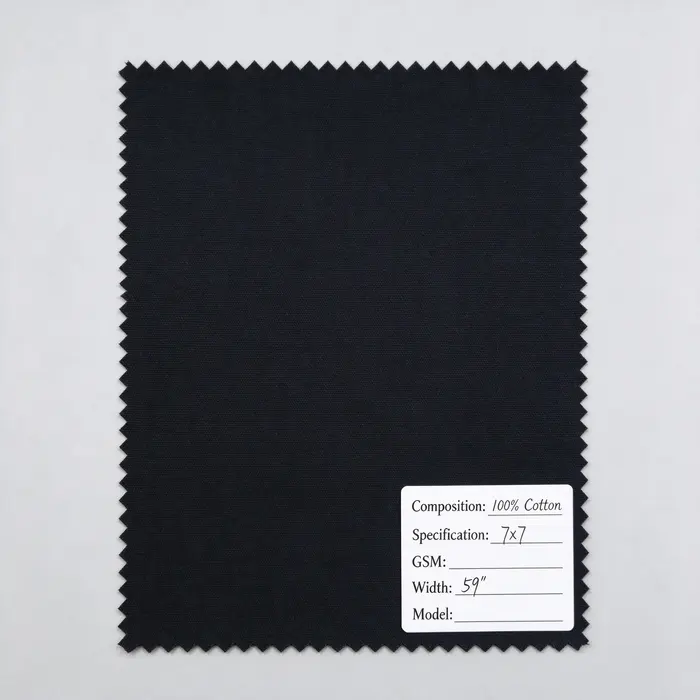
A Chilean copper mining operation replaced its mill liner protective curtains three times in 14 months. Each replacement cycle cost $38,000 in material plus 72 hours of unplanned downtime. The post-mortem was unambiguous: the standard 18 oz canvas specified in the original tender was failing at the surface — abrasive ore slurry was sanding through the fabric face long before the base weave lost structural integrity. The fix was a canvas engineered specifically for abrasion resistance, pushing the replacement interval past 24 months.
The global abrasion resistant fabric market was valued at USD 4.5 billion in 2024 and is projected to reach USD 7.8 billion by 2033, growing at a 6.5% CAGR (Verified Market Reports). Within industrial textiles, abrasion — not tensile failure, not UV degradation, not water penetration — is the single most common cause of premature fabric retirement in mining, construction, material handling, and heavy machinery applications. For B2B buyers sourcing abrasion resistant canvas fabric wholesale, the ability to specify, verify, and procure against quantified wear-performance metrics separates durable procurement from recurring replacement costs.
Abrasion Resistance in Canvas: More Than Heavyweight Construction
Abrasion resistance is not synonymous with fabric weight. A 24 oz/yd² plain-weave canvas with soft-twist open-end yarns can abrade faster than a tightly woven 14 oz/yd² canvas with ring-spun high-twist yarns and a surface-hardening finish. Surface durability is a function of four interacting variables:
1. Yarn Architecture
| Yarn Type | Twist Level | Fiber Protrusion | Relative Abrasion Performance |
|---|---|---|---|
| ----------- | ------------- | ------------------ | ------------------------------- |
| Ring-spun, high-twist | 18-22 TPI | Low — fibers locked in helix | Best: compact surface, fewer loose fiber ends exposed to shear |
| Ring-spun, standard twist | 14-17 TPI | Moderate | Good: balanced hand and durability |
| Open-end (rotor), standard twist | 12-15 TPI | Higher — more surface fiber ends | Moderate: adequate for medium-duty, lower cost |
| Open-end, low-twist | <12 TPI | High — significant fiber bloom | Poor: fibers strip out under low-cycle abrasion |
Why it matters: Each Martindale cycle simulates a directional rubbing motion. Loose surface fibers act as initiation points — once one fiber lifts and breaks, it exposes the next, creating a cascading wear mechanism. High-twist ring-spun yarns delay this cascade by keeping fiber ends mechanically locked.
2. Weave Density and Surface Geometry
Plain-weave constructions with higher pick-per-inch counts present a flatter, more uniform surface to the abradant, distributing frictional energy across more contact points. A 1/1 plain weave at 52 × 48 construction offers measurably better abrasion resistance than a 2/1 twill at the same GSM — the twill's longer floats create raised ridges that concentrate wear on the float crowns.
3. Fiber Composition and Blending
- 100% cotton: Natural surface roughness provides excellent Martindale baseline (15,000–25,000 cycles for untreated 18 oz). Absorbs moisture, which can act as a lubricant in wet-abrasion scenarios. - Cotton-polyester blends (CVC, 60/40 or 65/35): Polyester's higher intrinsic abrasion resistance (2–3× cotton on a fiber-to-fiber basis) raises the composite Martindale threshold 30–50% above 100% cotton at equivalent weight. - 100% polyester with specialized finishes: Can exceed 50,000 Martindale cycles before end-point, though surface hand and moisture behavior differ significantly from cotton.
4. Abrasion-Enhancing Finishes
Post-weaving treatments that harden or lubricate the fiber surface:
| Finish Type | Mechanism | Martindale Gain | Trade-off |
|---|---|---|---|
| ------------- | ----------- | ----------------- | ----------- |
| Acrylic binder coating (knife-over-roll, light add-on) | Binds surface fibers into a film, preventing fiber lift | +30–50% vs untreated | Stiffens hand; breathability reduced |
| Fluorocarbon resin (low-concentration pad-dry-cure) | Fiber-level lubrication reduces friction coefficient | +15–25% vs untreated | Limited durability after laundering |
| Silicone softener + crosslinking agent | Surface slip without hand compromise | +10–20% | May interfere with post-printing or adhesive bonding |
| PU light face coating (5–10 g/m² add-on) | Forms a sacrificial wear layer | +40–60% | Adds cost; surface becomes non-breathable |
How to Quantify Abrasion Resistance: Standards That Matter for B2B Procurement
Three test methods dominate industrial canvas procurement specifications. Knowing which one applies to your use case prevents apples-to-oranges supplier comparisons.
ISO 12947-2 (Martindale Method) — The Universal Standard
- What it measures: Fabric endurance under multi-directional rubbing against a standard wool abradant under a specified load (9 kPa or 12 kPa). - End-point criteria: Thread breakage (two yarns broken) or unacceptable appearance change — specified in the purchase contract. - Relevant thresholds for industrial canvas: - Light-duty protective covers: ≥15,000 cycles - Medium-duty machinery covers: ≥25,000 cycles - Heavy-duty mining/material handling: ≥40,000 cycles - Extreme-duty (conveyor carcass, chute liners): ≥50,000 cycles - Critical note for procurement: The same fabric tested at 9 kPa vs 12 kPa load can show a 20–30% difference in cycles to failure. Always specify load pressure in the test report requirement.
ASTM D3884 (Taber Rotary Platform) — Coated and Laminated Fabrics
- What it measures: Abrasion using rotating abrasive wheels (H-18 or CS-10) under controlled weight. - Best for: Coated canvas — PU, PVC, acrylic, silicone — where surface coating integrity, not base-fabric structure, is the wear-limiting layer. - Typical reporting: Cycles to coating breakthrough (base fabric visible) or specified mass loss (mg per 1,000 cycles).
ASTM D4157 (Wyzenbeek Oscillatory Cylinder) — North American Heavy-Duty Specification
- What it measures: Unidirectional back-and-forth rubbing under tension using cotton duck #10 or wire screen abradant. - Industry relevance: Frequently specified in North American heavy machinery and transportation sectors. Results are not directly convertible to Martindale — a 30,000 Wyzenbeek double rub does not equal 30,000 Martindale cycles.
Cross-Method Equivalence: A Buyer's Caution
There is no universal conversion formula between Martindale, Taber, and Wyzenbeek. Abrasion mechanisms differ — Martindale is multi-directional (Lissajous figure), Taber is rotary, Wyzenbeek is linear oscillatory. Requiring the same test method across all supplier quotations is the only reliable approach to comparative evaluation.
Key Industrial Applications Where Abrasion Resistance Defines Service Life
Mining and Bulk Material Handling — Chute Liners and Skirtboard Fabrics
Ore, aggregate, sand, and coal moving through transfer chutes at 2–5 meters per second subject liner fabrics to continuous low-angle particle impingement. This is distinct from impact damage — the particles scrape, not strike.
Specification benchmark: - Fabric: 20–24 oz/yd² high-twist ring-spun cotton or cotton-polyester canvas - Martindale target: ≥50,000 cycles (12 kPa load) - Additional requirements: Anti-static treatment if handling combustible dust (refer to ATEX/DSEAR compliance), moisture resistance for wet-processing circuits - Critical procurement check: Request abrasion data after coating or finishing — some treatments reduce the base fabric Martindale performance by 15–20%.
Real-world validation metric: A properly specified abrasion resistant canvas liner in a copper concentrator chute should deliver 18–24 months service life vs 6–8 months for a generic heavyweight canvas.
Heavy Machinery Protective Covers — CNC, Construction, and Agricultural Equipment
Outdoor-stored machinery — excavators, CNC machining centers, agricultural harvesters — faces a double threat: environmental exposure (UV, rain, dust) plus mechanical abrasion from wind-flapping against metal edges and repeated cover installation/removal cycles.
Specification benchmark: - Fabric: 14–18 oz/yd² cotton-polyester with acrylic binder or light PU face coating - Martindale target: ≥25,000 cycles - Additional requirements: UV resistance (ISO 105-B02 Grade ≥6, QUV 500-hour tensile retention ≥80%), water repellency (AATCC 22 Spray Rating ≥80), breathability to prevent condensation corrosion - Design consideration: Abrasion concentrates at the cover's hem edges and tie-down grommet zones. Double-layer reinforcement at these points is standard practice for OEM cover manufacturers.
ROI comparison: A CNC machine cover made from abrasion resistant canvas at $85/unit with 36-month service life yields a monthly cost of $2.36 vs a standard canvas cover at $45/unit replaced every 12 months at $3.75/month. The "premium" fabric is 37% cheaper over the equipment lifecycle.
Conveyor Belt Carcass Fabric — The Hidden Wear Component
Multi-ply conveyor belts use canvas fabric plies as the structural carcass, with rubber covers bonded to both faces. When the rubber cover wears through — inevitable in abrasive material transport — the canvas carcass becomes the last line of defense against catastrophic belt failure.
Specification benchmark: - Fabric: Cotton-polyester or polyester-nylon canvas, 200–400 GSM per ply, EP (polyester warp/nylon weft) construction - Tensile strength: ≥500 N/mm (EP200) to ≥1,000 N/mm (EP400) - Abrasion target for carcass canvas (ISO 12947-2): ≥30,000 cycles - Adhesion: Rubber-to-fabric bond ≥4.5 N/mm (ISO 252) — low adhesion leads to ply separation under abrasive loading - Market context: EP conveyor belt fabrics account for over 65% of the global fabric-reinforced conveyor belt carcass market, with abrasion resistance the #2 specification parameter after tensile strength.
Industrial Workwear and PPE — Foundry Aprons, Welding Sleeves, Abrasive Blasting Suits
Protective clothing in foundries, welding bays, and sandblasting operations sees direct high-energy particle contact. The fabric must survive not just radiant heat and spark exposure, but sustained abrasive wear from metal scale, slag, and blasting media.
Specification benchmark: - Fabric: 16–22 oz/yd² cotton or FR-treated cotton-polyester - Martindale target: ≥30,000 cycles (abrasion face) - Additional requirements: Flame resistance (EN ISO 11612, NFPA 2112 as applicable), tensile strength ≥400 N (ISO 13934-1), tear strength ≥25 N (ISO 13937-2) - Design note: Abrasion in foundry PPE concentrates at the chest, forearm, and knee zones; garment designs increasingly use abrasion resistant canvas panel inserts rather than full-garment heavy fabric to balance protection with worker mobility.
Sourcing Checklist: 8 Verification Points for Abrasion Resistant Canvas Bulk Procurement
1. Demand the full test report, not a summary number. A supplier claiming "Martindale 40,000+" must provide the complete ISO 12947-2 report specifying load pressure (9 kPa or 12 kPa), abradant type, end-point criterion, and number of specimens tested. A single-number claim without methodology context is worthless.
2. Require abrasion data on the finished fabric, not the greige. Finishing chemistry changes surface behavior. A greige fabric testing at 30,000 cycles can drop to 22,000 after dyeing and softening — or climb to 45,000 after an acrylic binder treatment. Test the exact construction you are buying.
3. Specify Martindale in the purchase contract with load and end-point. The ideal clause: "Fabric shall withstand a minimum of 40,000 Martindale abrasion cycles tested per ISO 12947-2 at 12 kPa load, with end-point defined as thread breakage of two or more yarns, on a minimum of four specimens."
4. Cross-check with tear strength. High abrasion resistance achieved through stiff, brittle coatings can reduce tear strength — a fabric that resists surface wear but rips easily at seams is a different failure mode. Require ISO 13937-2 (single tear) ≥25 N for medium-weight industrial canvas.
5. Verify tensile strength retention after abrasion. Request tensile strength (ISO 13934-1) before and after 50% of the target Martindale cycles. A drop greater than 25% indicates the abrasion mechanism is degrading the yarn core, not just the surface.
6. Evaluate coating-to-fabric adhesion for coated products. If specifying PU, PVC, or acrylic-coated abrasion resistant canvas, require ISO 2411 adhesion testing — target ≥15 N/50mm. Coating delamination under abrasion defeats the purpose of the coating.
7. Request the yarn specification, not just fabric weight. Two 18 oz/yd² canvases can have different abrasion resistance because one uses high-twist ring-spun cotton and the other uses open-end with lower twist. Ask for yarn type (ring-spun vs open-end), twist level (TPI or TPM), and fiber staple length.
8. Pre-production samples with third-party lab verification. Before committing to a 5,000-meter bulk order, request A4-sized pre-production samples and independently commission ISO 12947-2 testing at an ISO 17025-accredited laboratory. The $300–500 cost is negligible against the risk of accepting a full container of underperforming fabric.
Why Partner With a Direct-Factory Abrasion Resistant Canvas Manufacturer
The abrasion resistance of canvas is not a property that can be "added" at the trading-company level. It is engineered at three points in the manufacturing chain, all of which benefit from vertical integration:
1. Yarn selection at the spinning stage. A direct manufacturer with established spinning-mill relationships can specify ring-spun high-twist constructions for abrasion-critical orders. A trading company buying stock greige fabric has no control over yarn parameters.
2. Weave density optimization. Picanol and other high-precision looms maintain consistent pick density (±2% across full-width), which directly affects surface flatness and abrasion uniformity. Lower-end shuttle looms with wider pick variation produce zones of lower density that abrade faster — a problem invisible to the naked eye on a 5 cm swatch but catastrophic in service.
3. Finishing formulation control. Abrasion-enhancing finishes — acrylic binders, silicone-based lubricants, light PU topcoats — require precise add-on control (±1 g/m² tolerance) and correct curing parameters. A factory with in-house finishing knows the chemistry; a trading company outsourcing to third-party finishers inherits process variability.
Additional B2B advantages of direct-factory sourcing: - Custom yarn blends for specific abrasion-to-cost targets (e.g., 70/30 cotton-polyester with high-twist for 35,000-cycle minimum at competitive pricing) - OEKO-TEX Standard 100 certification maintained at the facility level, not per-batch — critical for workwear and PPE buyers with chemical compliance requirements - Batch-level QC documentation: yarn lot → weave run → finish batch → final Martindale — full traceability for ISO 9001-audited supply chains - Consistent lead times with 3,000–5,000 meter minimum order quantities for custom specifications
Conclusion: Surface Durability as a Procurement Metric
Abrasion resistance is the most overlooked dimension of canvas fabric specification — and the most expensive to ignore. When a chute liner fails at 8 months instead of 24, when a machinery cover frays at the grommets after one season, when a conveyor carcass delaminates because surface wear exposed the plies — the common denominator is a procurement decision that treated canvas as a commodity measured only by weight and price.
Specifying abrasion resistant canvas fabric wholesale through quantified Martindale targets, verified yarn parameters, and finished-fabric testing transforms a reactive replacement cycle into a predictable asset lifespan. For mining operations, construction OEMs, conveyor belt manufacturers, and industrial PPE brands, the right canvas supplier is not the one offering the lowest per-meter price — it is the one providing the lowest per-cycle cost over the fabric's entire service life.
Related Products & Guides
[Contact our team for free A4 pre-production samples with third-party ISO 12947-2 Martindale test reports, custom yarn-blend specifications tailored to your abrasion targets, and bulk-order quotations with minimum 3,000-meter runs.]