Plain Weave vs Twill Weave Canvas: What Manufacturers Need to Know
The weave structure of canvas fabric determines its strength, texture, flexibility and end-use suitability. Learn the key differences between plain weave and twill weave canvas, and which applications each serves best in manufacturing.
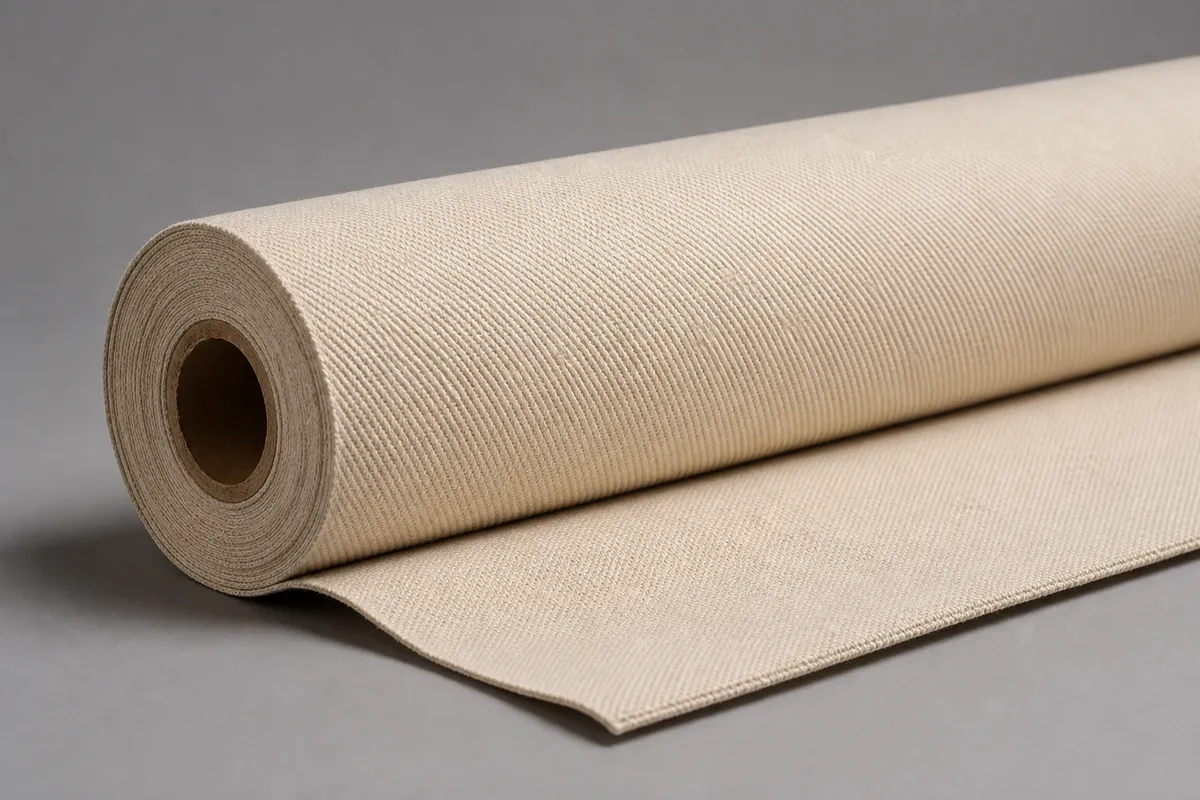
Plain Weave vs Twill Weave Canvas: What Manufacturers Need to Know
The Third Dimension of Canvas Specification
When a canvas buyer specifies only GSM and fiber composition, they leave out a third dimension that fundamentally changes how the fabric performs: the weave structure. The same 10oz, 100% cotton canvas will behave completely differently in plain weave versus twill weave. Understanding this difference — and knowing when to specify each — is the mark of an experienced canvas buyer.
This guide provides the technical comparison, practical selection framework, and manufacturing considerations that B2B buyers need to make informed weave decisions. For a manufacturer-focused version organized by application rather than by technical property, see our canvas for bag manufacturing guide.
Plain Weave (1/1) — How It Works and What It Delivers
In plain weave — also called tabby weave — each weft (horizontal) yarn passes alternately over one warp (vertical) yarn and under the next, creating a simple checkerboard pattern. This 1/1 over-under structure produces the maximum possible number of interlacing points in a woven fabric: every single intersection between warp and weft is mechanically locked. The physical result: a fabric with maximum structural integrity per weight, a flat, uniform surface with no visible texture pattern, high dimensional stability (the fabric resists stretching on the bias), and excellent tear resistance because force must break yarns at every intersection.
Plain weave canvas is the correct choice when: your product needs to hold a defined shape (structured backpacks, box bags), you are printing detailed graphics or logos on the fabric surface (smooth surface = sharper prints), you need the maximum durability per gram of fabric weight, your cutting process requires fabric that does not distort on the bias, or your product uses large flat panels (upholstery, panels, covers). Trade-offs: plain weave feels stiffer and less flexible than twill at the same weight, has slightly less drape, and can be more difficult to handle on tightly curved seams.
Twill Weave (2/1 or 3/1) — How It Works and What It Delivers
Twill weave is characterized by its visible diagonal lines. In a 2/1 twill, each weft yarn passes over two warp yarns, then under one — creating a pattern that steps one yarn to the side with each row. This structure has fewer interlacing points than plain weave, allowing the yarns more freedom to move against each other. The physical result: a softer, more flexible fabric with better drape, a visible diagonal texture pattern on the surface, the ability to pack more yarns per inch (higher thread density) than plain weave at the same weight, and a fabric that handles curved seams more easily.
Twill weave canvas is the correct choice when: your product involves curved seams (backpack shoulder straps, contoured panels), wearer comfort matters (workwear, apparel), you want a premium visible texture (fashion bags, denim-style products), or you need a softer drape (duffel bags, unstructured totes). Trade-offs: twill has slightly lower tear resistance per intersection (compensated by higher thread density), the diagonal texture shows through light printing, and it typically costs 3–8% more due to more complex loom setup.
Head-to-Head Technical Comparison
| Property | Plain Weave (1/1) | Twill Weave (2/1 or 3/1) |
|---|---|---|
| Surface texture | Flat, smooth, uniform | Diagonal lines, visible texture |
| Hand feel | Firmer, stiffer, more structured | Softer, more flexible, better drape |
| Printability — screen printing | Excellent (flat surface, sharp edges) | Good (texture may show through light ink) |
| Printability — digital/DTG | Excellent | Very Good |
| Tear resistance | Higher per intersection | Slightly lower per intersection; compensated by density |
| Dye absorption | Good, even penetration | Excellent (looser structure = deeper dye) |
| Maximum thread density | Standard for GSM | 10–15% higher (more yarns per inch) |
| Bias stability | Very high | Good |
| Curved seam handling | Adequate (needs more skill) | Excellent (more forgiving) |
| Relative cost | Baseline | +3–8% |
Manufacturing Implications for B2B Buyers
Cutting: Plain weave canvas cuts cleanly and holds its shape on the cutting table — important for automated cutting systems. Twill weave requires slightly more care on the bias grain. Sewing: Twill weave is noticeably easier to sew through multiple layers and around curved seams. Operators report 10–15% higher throughput on twill vs. plain weave for complex bag patterns. Printing: For detailed logos and text under 12pt font size, plain weave is strongly preferred. The diagonal texture of twill will cause slight ink bleed at fine detail levels. Dyeing: Twill achieves deeper, richer colors in piece-dyeing because dye penetrates more fully into the looser weave structure. If your product depends on deep, saturated color, twill has an edge.
Plain weave (1/1) creates a flat, tight surface with maximum interlacing points — best for structure and printability. Twill weave (2/1 or 3/1) has fewer interlacing points, producing a softer, more flexible fabric with a visible diagonal texture.
Which weave is better for bags?
Plain weave is better for structured bags requiring shape retention and print surface. Twill weave is preferred for casual bags and apparel where softness and drape matter more.
Is twill weave more expensive than plain weave?
Twill weave typically costs 3-8% more due to more complex loom setup. However, the difference is often offset by better cutting efficiency for curved patterns.
Can you print on twill weave canvas?
Yes, but the diagonal texture will show through light prints. For detailed graphics and logos, plain weave provides a smoother, more uniform surface for screen and digital printing.
Get Started
Not sure which weave suits your product? Send us your specifications and we will recommend the best weave structure for your application — with free swatch samples to compare.
Related Products
Explore our recommended canvas products for this application:
| Product | Description |
|---|---|
| 10oz Cotton Canvas — Plain Weave | 340 GSM 100% cotton, plain weave, dyed |
| 10oz CVC Canvas — Twill Weave | 407 GSM CVC 80/20, twill weave, dyed |
| 12oz Cotton Canvas — Plain Weave Heavy | 407 GSM 100% cotton, plain weave, greige |