How to Import Canvas Fabric from China: Complete Guide for 2026
Complete step-by-step guide for B2B buyers importing canvas fabric from China. Covers supplier qualification, sampling, FOB vs CIF pricing, payment terms, third-party QC inspection, HS codes, sea freight transit times, and a real 10-week import timeline. Save 30–50% by sourcing directly from the factory.
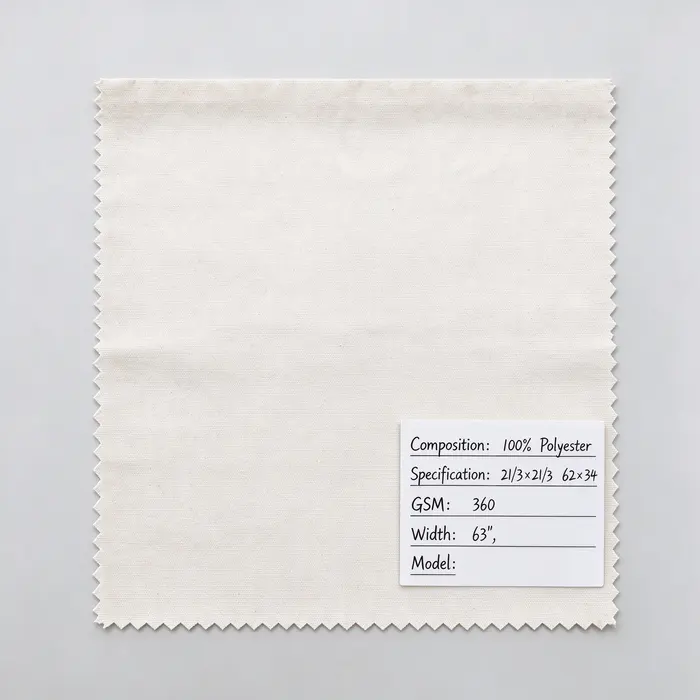
How to Import Canvas Fabric from China: Complete Guide for 2026
Why Import Canvas Directly from China?
China dominates global textile production, accounting for over 50% of all fabric output. For canvas specifically, Chinese mills offer a combination of scale, expertise, and pricing that domestic distributors cannot match. Buying directly from a Chinese canvas manufacturer typically reduces your per-meter cost by 30–50% compared to sourcing through intermediaries or domestic wholesalers.
However, importing fabric from China involves navigating language barriers, quality verification, logistics, customs, and payment risks. This guide covers every step — from identifying a legitimate supplier to receiving your container at your warehouse — with specific numbers, timelines, and checklists for B2B canvas buyers.
Step 1: Qualify Your Canvas Supplier (Do Not Skip This)
The single biggest mistake first-time importers make is sending money to an unverified supplier. A professional-looking website and responsive WhatsApp communication are not enough.
Required Documentation Checklist
Business License: Confirms the company legally exists. Verify the registration number on the national enterprise credit system. Export License: Required for any factory exporting directly. Without it, a trading intermediary adds 5–15% to your cost. Factory Audit Report: Request a third-party audit (SGS, Bureau Veritas, Intertek) or schedule a live video factory tour. Look for weaving looms on the production floor, an in-house quality lab, yarn inventory, and finishing equipment. Trade References: Ask for three references in your target market who placed similar-size orders — and actually contact them.
Factory Visit and Video Tour Checklist
In person or via live video, verify: loom count and model (Picanol GAMMA looms indicate a serious heavy-fabric operation); humidity-controlled yarn storage; QC lab equipment (GSM cutter, tensile tester, lightfastness tester, color matching booth); organized finished-goods warehouse with clear labeling; and a shipping dock with container loading capability. A legitimate canvas factory operates 20+ looms, employs 50+ workers, and displays production scheduling on the shop floor.
Red Flags Every Buyer Should Recognize
Supplier refuses a video tour. Cannot provide a business license within 24 hours. Quotes prices 20%+ below the market average. Communicates only through a personal email address without a company domain. Demands 100% upfront payment from a new buyer. Any single flag warrants caution. Multiple flags — walk away.
Step 2: Sampling and Lab Dip Process
Never place a bulk order without first holding approved physical samples in your hands. This phase takes 7–10 business days and costs $50–150 in courier fees. It is the cheapest insurance you will ever buy for a canvas import.
Three Types of Samples Every Buyer Needs
Hand Feel Swatches: 10 × 10 cm pieces showing exact fabric weight, weave, and texture. Request swatches for every GSM/fiber combination under consideration. Lab Dip Color Samples: 5 × 5 cm dyed swatches matching your target color. Always approve lab dips in writing (email) before production starts. Keep one set and return one signed copy to the supplier. Production Sample: A one-meter piece produced on the actual loom that will run your order. Essential for first-time orders above $10,000.
Sampling Timeline and Budget
Hand feel swatches: 3–5 business days, usually free (you pay shipping). Lab dips: 5–7 business days, free for qualified buyers or $30–50 per color. Production samples: 7–10 business days, $50–100 depending on complexity. All samples ship via DHL or FedEx international priority (2–4 day transit). Budget two weeks and approximately $100–200 in courier fees for the complete sampling phase.
Step 3: Pricing, Incoterms, and Payment Terms
Understanding pricing structures and payment terms is where B2B buyers either protect their margin or lose it entirely.
FOB vs. CIF vs. DDP — Which One Should You Choose?
FOB (Free on Board): The supplier delivers goods to the port and loads them onto the vessel. You control shipping and insurance from that point. Best for experienced importers with an existing freight-forwarder relationship. Typically 15–25% cheaper on the shipping leg than CIF. CIF (Cost, Insurance, Freight): The supplier arranges shipping and marine insurance to your destination port. Simpler for first-time importers, but you pay a markup on freight and the supplier chooses the forwarder. DDP (Delivered Duty Paid): The supplier handles everything including import duties. Convenient but expensive. Rarely used for bulk canvas orders.
Standard Payment Structure for Canvas Orders
The industry standard: 30% T/T deposit on order confirmation, 70% T/T against a copy of the Bill of Lading (B/L) before shipment release. For new supplier relationships, consider a Letter of Credit (L/C) for orders above $30,000 — it adds $200–500 in bank fees but protects both parties. Never pay 100% upfront to a new supplier. Never send payment to a personal bank account — always pay a company account matching the business license.
Hidden Costs to Include in Your Budget
Beyond the FOB fabric price, budget for: sea freight ($1,500–3,000 per 20-ft container to US or Europe); marine insurance (0.3–0.5% of cargo value); customs bond ($300–600 annually); import duties (typically 5–12% for cotton canvas, 8–15% for polyester, depending on country and HS code); customs broker fees ($150–400 per entry); port handling and drayage ($500–1,200); and warehousing if needed. Total landed cost is usually 125–145% of the FOB fabric price.
Step 4: Quality Control and Third-Party Inspection
Quality disputes are the leading cause of conflict in canvas importing. A clear inspection protocol agreed upon before production starts eliminates ambiguity.
The 4-Point Fabric Inspection System
The textile industry standard for woven fabrics: inspectors assign penalty points based on defect size — 1 point for defects ≤3 inches, up to 4 points for defects over 9 inches or holes. The maximum acceptable score is 40 points per 100 square yards. For premium orders, specify a 20-point maximum. Write the inspection standard directly into your purchase order.
GSM Verification Protocol
Underweight fabric is the most common quality complaint. Verify GSM using a calibrated GSM cutter and precision scale. Test at least three samples per production lot: beginning, middle, and end of the run. Acceptable tolerance is ±5 GSM for medium-weight canvas and ±10 GSM for heavyweight fabric. If more than two out of five samples fall consistently below tolerance, reject the lot or negotiate a price adjustment before shipment. Document all test results with photos.
When to Hire a Third-Party Inspector
For orders above $5,000, third-party inspection is strongly recommended. SGS, Bureau Veritas, and Intertek all offer textile-specific inspection in China. A standard inspection covers: quantity verification, GSM measurement, color matching against the approved lab dip, weaving defect check, width verification, roll length measurement, packaging and marking check, and container loading supervision. Cost: $300–500 per inspection day. A typical inspection takes 4–8 hours for a 5,000–20,000 meter order.
Step 5: Shipping, Customs, and Delivery Timeline
Canvas Fabric HS Codes
100% Cotton Canvas → HS 5209.11–5209.59 (woven cotton fabrics >200 g/m²). T/C Poly-Cotton Canvas → HS 5513.11–5513.49 (synthetic staple fiber fabrics, <85% polyester, blended with cotton). 100% Polyester Canvas → HS 5407.10–5407.69 (woven synthetic filament fabrics). Incorrect HS coding causes customs delays, fines, and incorrect duty rates. Always confirm the code with your destination-country customs broker — never rely solely on the supplier classification.
Sea Freight Transit Times from China
From major Chinese ports (Tianjin — nearest to Shijiazhuang, Shanghai, Ningbo): to US West Coast (Los Angeles/Long Beach) — 12–18 days. To US East Coast (New York/Savannah) — 25–35 days. To Northern Europe (Rotterdam/Hamburg) — 25–30 days. To Mediterranean (Barcelona/Genoa) — 22–28 days. To Middle East (Jebel Ali/Dubai) — 15–20 days. To Southeast Asia — 5–10 days. Add 3–5 days for customs clearance at the destination port.
Real-World Import Timeline Example
Week 1–2 — Supplier qualification and sampling. Week 3 — Lab dip approval and order confirmation. Week 4–6 — Production (made-to-order, 15–25 days). Week 7 — Third-party inspection, balance payment, container loading. Week 8–10 — Sea freight transit. Week 11 — Customs clearance and final delivery. Total: approximately 10–12 weeks from first inquiry to fabric in your warehouse. Stock fabrics reduce this to 2–3 weeks total.
Six Most Common Import Mistakes and How to Avoid Them
1. Skipping the sample phase. A $100 sample can prevent a $20,000 order mistake. 2. Vague specifications. "10oz cotton canvas" is not a complete spec. Use the full checklist from our canvas fabric specifications guide. 3. Ignoring total landed cost. FOB price × 1.35 = approximate landed cost. If your margin cannot absorb a 35% adder, find a different product or price point. 4. Not inspecting before shipment. Once goods leave China, quality disputes become exponentially harder to resolve. Inspect before the container is sealed. 5. Wrong HS code. Misclassification can trigger audits going back 3–5 years. Get the code right the first time. 6. No backup supplier. Qualify at least two suppliers before placing a large order. Factory disruptions happen — have a plan B.
MOQ starts from 500 meters for stock fabrics and 3,000 meters for custom production. Contact us to discuss your specific requirements.
How can I request a sample?
Free swatch samples are available for all stock products. Visit our samples page or contact us with your requirements.
Do you offer custom colors or finishes?
Yes, we offer custom dyeing to Pantone colors and various finishing options including coating, printing, and pre-shrinking. A lab dip is provided for approval before bulk production.
How long does delivery take?
Stock fabrics ship within 3-5 business days. Made-to-order production takes 15-25 days depending on quantity and finishing requirements.
Get Started
Ready to source canvas directly from our factory? Send an inquiry with your specifications — we provide FOB/CIF pricing, lead time, and full QC documentation within 24 hours.
Related Products
Explore our recommended canvas products for this application:
| Product | Description |
|---|---|
| All Canvas Products | Browse our full product range for import |
| Request FOB/CIF Quote | Tell us your import port and target volume |