Canvas Fabric Specifications: A Complete B2B Procurement Checklist
Every canvas fabric buyer needs a clear specification sheet before ordering. Use this 10-point checklist covering GSM, fiber composition, weave, width, finish, color, certification, packaging, lead time, and inspection criteria to avoid miscommunication with your supplier.
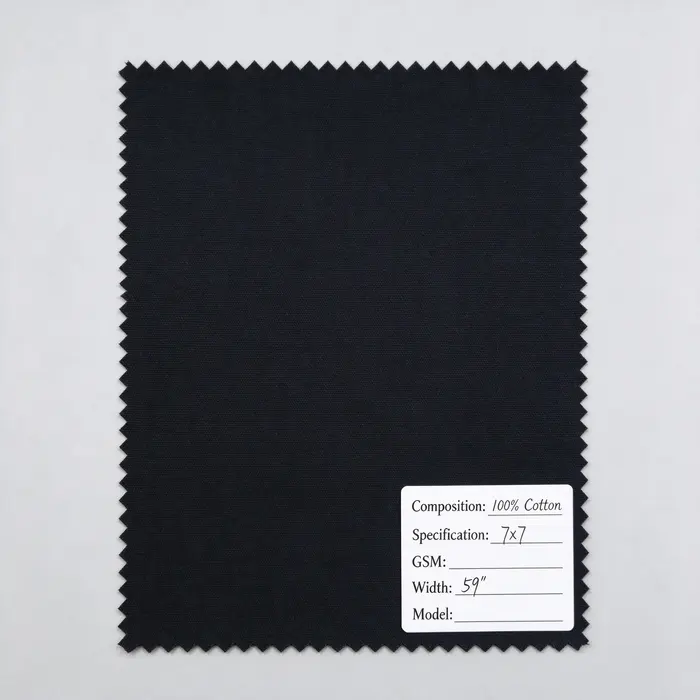
Canvas Fabric Specifications: A Complete B2B Procurement Checklist
Why Canvas Specifications Matter — The Cost of Vague Orders
The number one cause of B2B canvas order disputes is incomplete specifications. A purchase order that reads "10oz cotton canvas, navy blue" leaves at least eight critical parameters undefined. When the fabric arrives and it is 9.5oz instead of 10oz, or the navy is slightly off-shade, or the roll width is 2 inches narrower than expected — the supplier will point to the PO and say "this is what you ordered." And technically, they will be right.
This 10-point checklist eliminates ambiguity. Use it as your canvas procurement template. Send it with every inquiry. Attach it to every purchase order. Your supplier will respect you more, your quality consistency will improve, and your rejection rate will drop.
1. GSM (Fabric Weight) — Specify Target plus Tolerance
Write: "340 GSM ± 5 GSM" — not "10oz canvas." Specifying the tolerance is critical: ±5 GSM is the quality standard, ±10 GSM is commercial grade, and anything wider suggests the mill does not control its process well. GSM should be verified at incoming QC using a calibrated GSM cutter (100 cm² die) and a 0.01 g precision scale. Record results in your batch acceptance record. If more than 2 out of 5 samples fall below the tolerance band, reject the lot.
Also specify whether GSM is measured on greige fabric or finished fabric. Coatings, pre-shrinking, and dyeing can shift the final weight by ±15 GSM. Standard practice: specify GSM on finished fabric as-shipped. If you need a specific finished weight, tell the supplier so they can adjust the greige weight accordingly.
2. Fiber Composition and Blend Ratio — Be Exact
Write: "100% Cotton" OR "T/C 65/35 (±2%)" OR "CVC 80/20 (±2%)." Ambiguous terms like "poly-cotton" or "cotton-rich" are not specifications. Request a burn test certificate or third-party lab report verifying the blend ratio. For blended fabrics, a 5% variation in polyester content changes tensile strength, shrinkage, and dye absorption — enough to affect your production outcome.
Pro tip: For premium bags, specify long-staple or combed cotton. The fiber length affects pilling, hand feel, and perceived quality. Standard canvas uses carded cotton with staple length 22–28 mm. Combed cotton uses 28–35 mm staple length and produces a noticeably smoother fabric — worth the 10–15% premium for high-end products.
3. Weave Structure — Plain, Twill, or Custom
Specify the exact weave and thread density. Write: "Plain weave (1/1), warp 32 ends/inch, weft 28 picks/inch" — not just "plain weave." For twill, specify the pattern (2/1 or 3/1). Thread count per inch in both directions determines fabric density and hand feel independent of GSM. Two 340 GSM plain weave fabrics can feel completely different if one has 28×24 and the other has 34×30 thread counts.
4. Width — Total vs. Cuttable (Know the Difference)
Write: "Cuttable width: 58 inches (±0.5 inch)." Always specify whether you are quoting total width (selvage to selvage) or cuttable width (usable fabric). The selvage — the non-usable bound edge — consumes approximately 1–2 cm per side. A supplier quoting "60-inch fabric" may be giving you only 58 inches of usable width. This 2-inch difference wastes 3.3% of your material across a production run.
Standard canvas widths: 44–45" (traditional, declining in use), 58–60" (modern industry standard for bags and apparel), 72"+ (wide-width for home textile and upholstery), 108"–120" (extra-wide for bedding and large covers). Custom widths are possible with MOQ of 5,000+ meters. Always confirm with your cutting room which width optimizes their marker efficiency.
5. Finish and Treatment — Every Step Adds Cost and Lead Time
Specify the exact finishing state: Greige (loomstate, no processing — cheapest, fastest), PFD (Prepared for Dyeing — scoured, bleached, ready for color), Piece-Dyed (solid color, specify Pantone code), Printed (digital or screen, specify artwork file and color profile), Coated (wax, PVC, PU, acrylic, or silicone — specify coating type and application side), Pre-Shrunk (sanforized or equivalent; specify target residual shrinkage, typically <3%), or Special finishes (FR/flame retardant, anti-microbial, anti-static, water repellent — each requires certification documentation).
6. Color Matching — Pantone, Lab Dip, and Tolerance
Write: "Pantone 19-4023 TPX Navy Blue. Lab dip required for approval before bulk production." Never approve a color from a digital photo — colors shift dramatically across screens. Always approve a physical lab dip under standardized lighting (D65 daylight). Keep one approved lab dip and return a signed copy to the supplier. Standard color tolerance for dyed canvas: Delta E ≤ 1.5 for solid colors, ≤ 2.0 for heather or mélange effects.
7. Certification Requirements — Specify Up Front
Certifications affect which raw materials the supplier can use and which dye house they can work with — so specify them before production, not after. Common canvas certifications: OEKO-TEX Standard 100 — verifies no harmful chemicals (most requested, minimum for EU market access). GOTS — Global Organic Textile Standard for organic cotton (requires certified supply chain). BCI — Better Cotton Initiative (widely available, lower cost than GOTS). GRS — Global Recycled Standard for recycled polyester. REACH — EU chemical regulation compliance (mandatory for EU import). Specify which certificate documentation you require with the shipment.
8. Packaging — How Your Fabric Arrives Matters
Specify: roll core (3" or 2" ID cardboard tube), roll direction (face-in or face-out), roll wrapping (poly bag, woven bag, or kraft paper), labeling (roll number, GSM, width, length, color, lot number, PO reference on every roll), and palletization (if container shipping, specify pallet dimensions and maximum weight). Poor packaging causes fabric damage in transit. Specify "export-standard packaging" and include a photo of acceptable packaging in your PO.
9. Lead Time — Realistic Scheduling Prevents Rush Fees
Write: "Delivery: 25 calendar days from lab dip approval." Stock fabrics ship in 3–5 business days. Made-to-order production: 15–25 days for standard dyeing, 20–30 days for printing or coating, 25–35 days for certified organic or special finishes. Add sea freight transit time to the delivery date. Always build a 5-day buffer into your schedule for customs delays, port congestion, or inspection findings.
10. Inspection Criteria — Define Acceptance Before Production
Write: "Inspection standard: 4-point system, AQL 2.5, major defects = 0, minor defects ≤ 10 per 100 yards." Specify who performs the inspection (internal QC, third-party SGS/Intertek/Bureau Veritas, or your own agent). Specify what happens if the lot fails: rework at supplier cost, price reduction, or lot rejection. Write these outcomes into the PO, not an afterthought after the problem occurs.
Download This Checklist
Save this 10-point canvas specification checklist. Send it with every inquiry and attach it to every purchase order. For a complete canvas ordering template, contact our team — we will provide a ready-to-use specification sheet with your first fabric sample.
MOQ starts from 500 meters for stock fabrics and 3,000 meters for custom production. Contact us to discuss your specific requirements.
How can I request a sample?
Free swatch samples are available for all stock products. Visit our samples page or contact us with your requirements.
Do you offer custom colors or finishes?
Yes, we offer custom dyeing to Pantone colors and various finishing options including coating, printing, and pre-shrinking. A lab dip is provided for approval before bulk production.
How long does delivery take?
Stock fabrics ship within 3-5 business days. Made-to-order production takes 15-25 days depending on quantity and finishing requirements.
Get Started
Have questions about canvas fabric? Contact our team for technical specifications, pricing, and free swatch samples. We respond within 24 hours.
Related Products
Explore our recommended canvas products for this application:
| Product | Description |
|---|---|
| All Canvas Products | Browse our complete canvas fabric catalog |
| Custom Canvas Quote | Specify your exact requirements and get pricing |